Resources
Insights on insurance technology, AI, and modern operations.
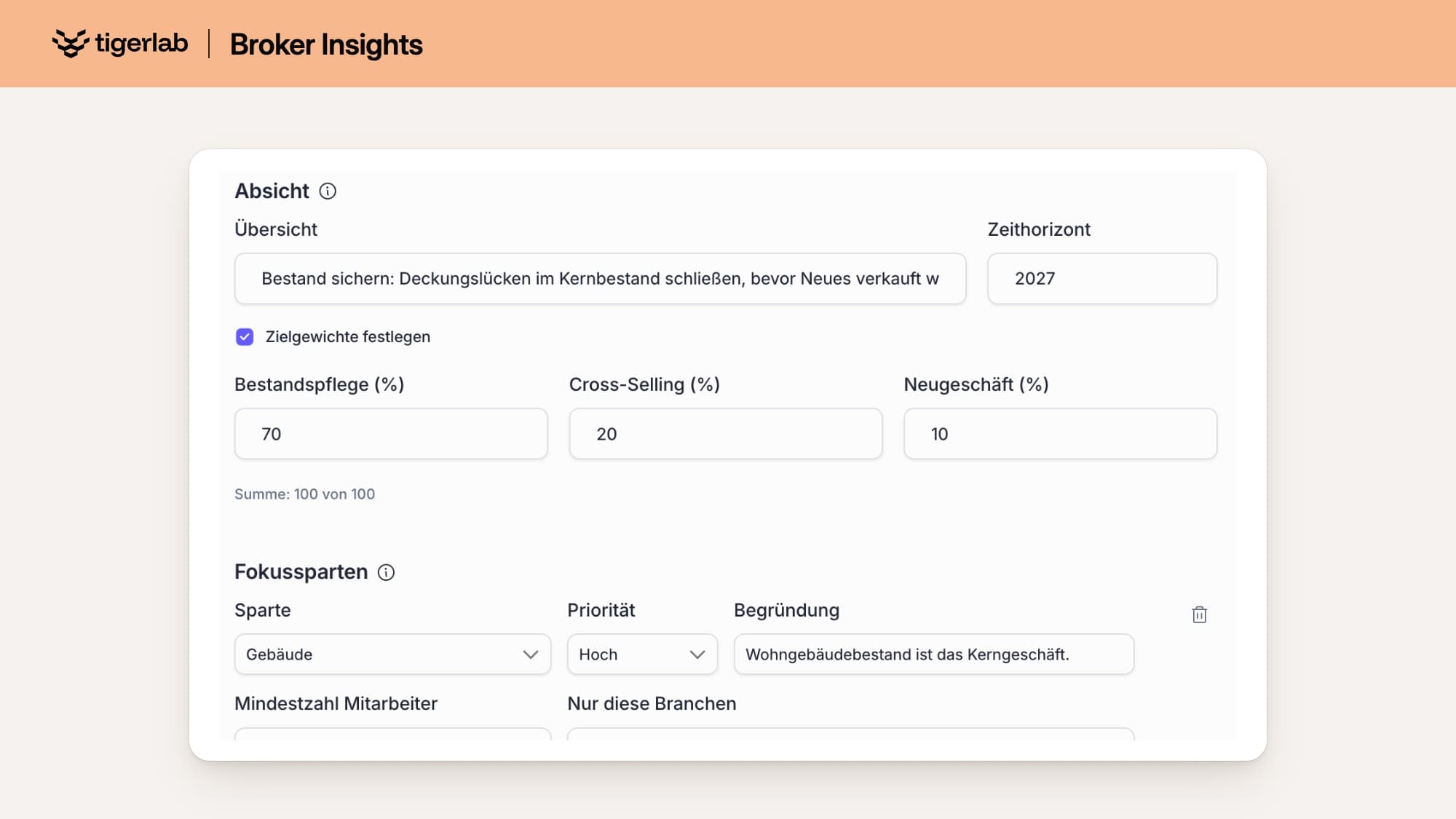
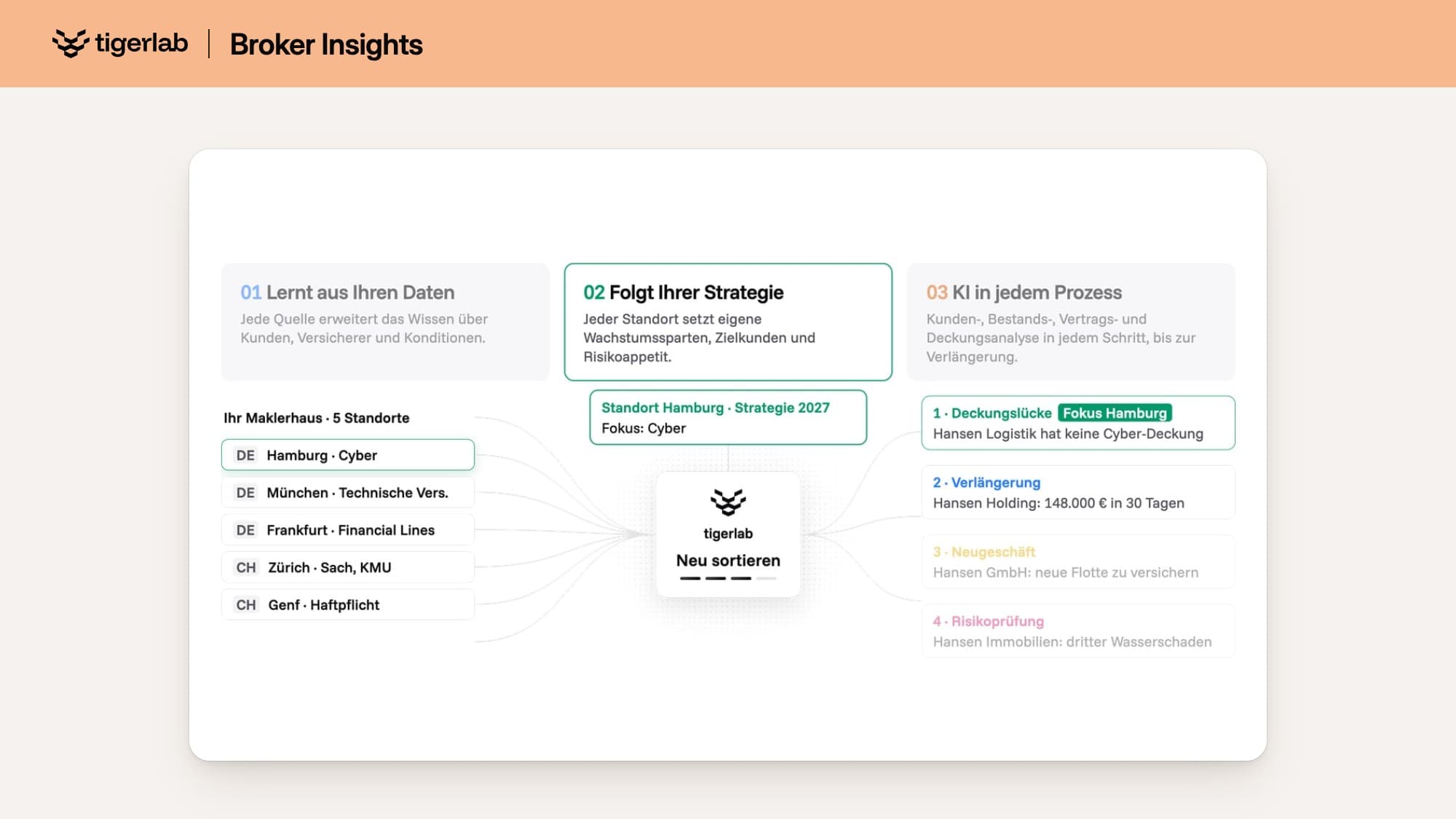
My broker management system knows everything about my clients. Except what I want to achieve.
Broker management systems are excellent archives, but they don't know what the firm is trying to achieve. Why the strategy belongs in the system, what changes day to day, and which objections are fair.

When anyone can be a broker: why your own know-how is the new competitive edge
Market knowledge about covers and wordings is available to everyone today, and AI makes it even more accessible. A broker's edge therefore lies in their own structured know-how, and the broker management system has to bring it into every analysis.
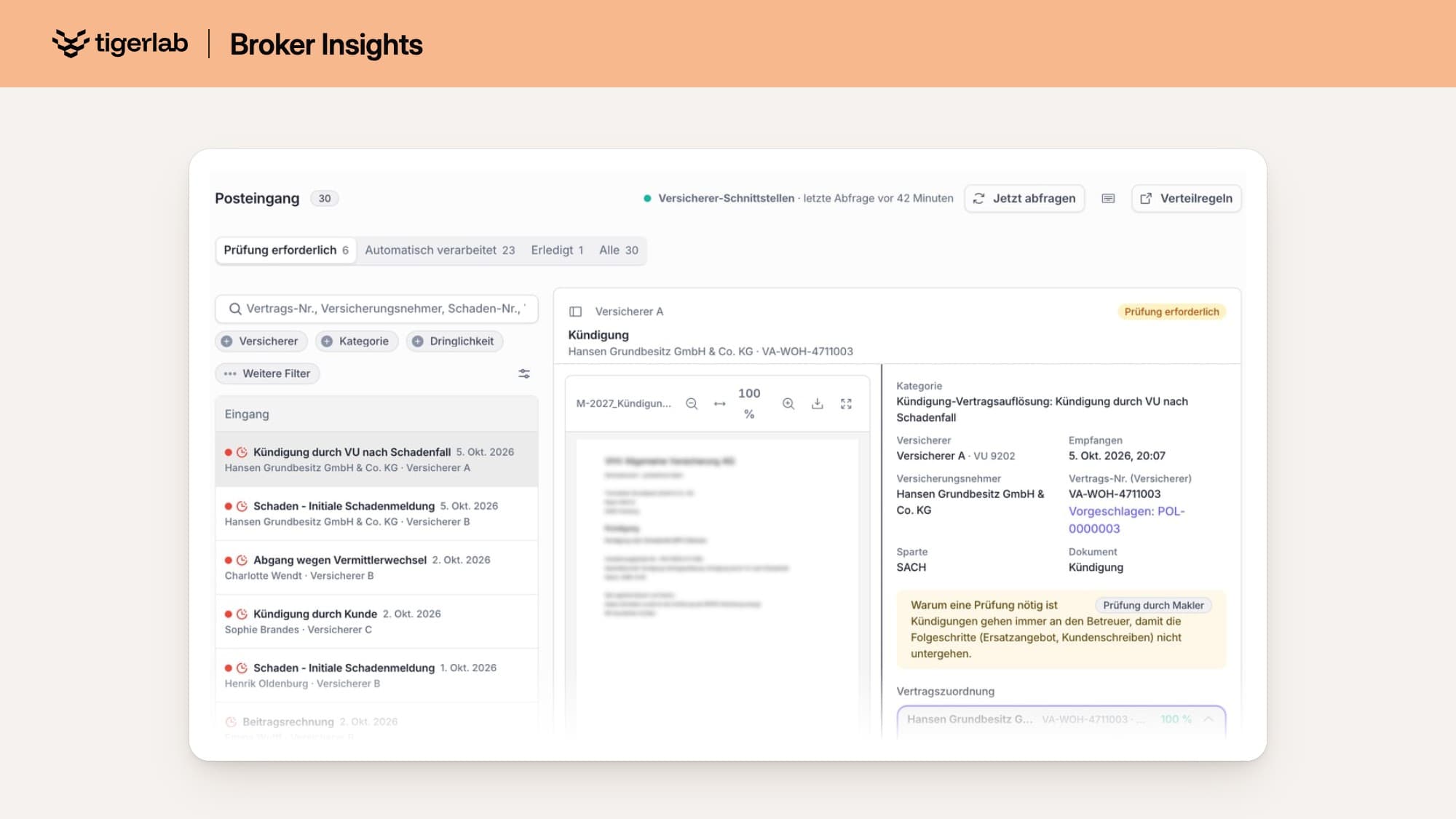
Download the PDF, upload it again: why BiPRO data often goes unused in brokerages
BiPRO and GDV data have long delivered everything needed to file insurer documents automatically. Why many brokerages still do it by hand, and five questions to put to your broker system.
Write down your quality standard: why every brokerage needs a house standard
Almost every brokerage has a quality standard for its clients' cover, but hardly any has written it down. What belongs in a house standard, and how to draft one in two or three team sessions.

The rules in someone’s head: referral discipline and key-person risk in delegated authority
Every delegated authority operation has a written referral schedule and an unwritten one. How key-person risk shows up in departures and audits, and what recording judgement means.

The evidence problem: what happens when someone asks you to prove it
Doing the work properly and proving it quickly are not the same. Why evidence takes so long to assemble, and three practical tests for your own files.

The bordereau is what the carrier sees
For many capacity providers, the monthly bordereau is the whole impression of your book. Where bordereau errors come from, and a test worth running this month.

Your system is being retired. What to ask before you migrate an open cover
Migrating a specialty book is not a data-volume problem but a relational one. What to ask any vendor before you move an open cover with years of declarations.

The check that happens too late: sanctions screening in a cargo book
Screening that runs after binding is a report, not a control. Why cargo books make sanctions screening harder, and three questions to ask about your own process.

One broker, four systems: what consolidation leaves in the back office
Acquisitions are justified on the front end; the cost turns up in the back office. What inheriting several broker systems really costs, and the questions to ask before the next deal.

Where is the cargo right now? Storage, accumulation and the limits of the spreadsheet
Cargo is insured as though it moves, but value concentrates where goods sit. Why storage accumulation is so hard to answer from declarations kept as attachments, and a short test of whether your own system can answer it.

After Blueprint Two: what a cargo coverholder should stop waiting for
Lloyd's has moved on from Blueprint Two, but a cargo coverholder's obligations never moved. Where the risk sits in referral rules, screening and declarations, what owning it looks like, and why broking and underwriting belong on one platform.