Download the PDF, upload it again: why BiPRO data often goes unused in brokerages
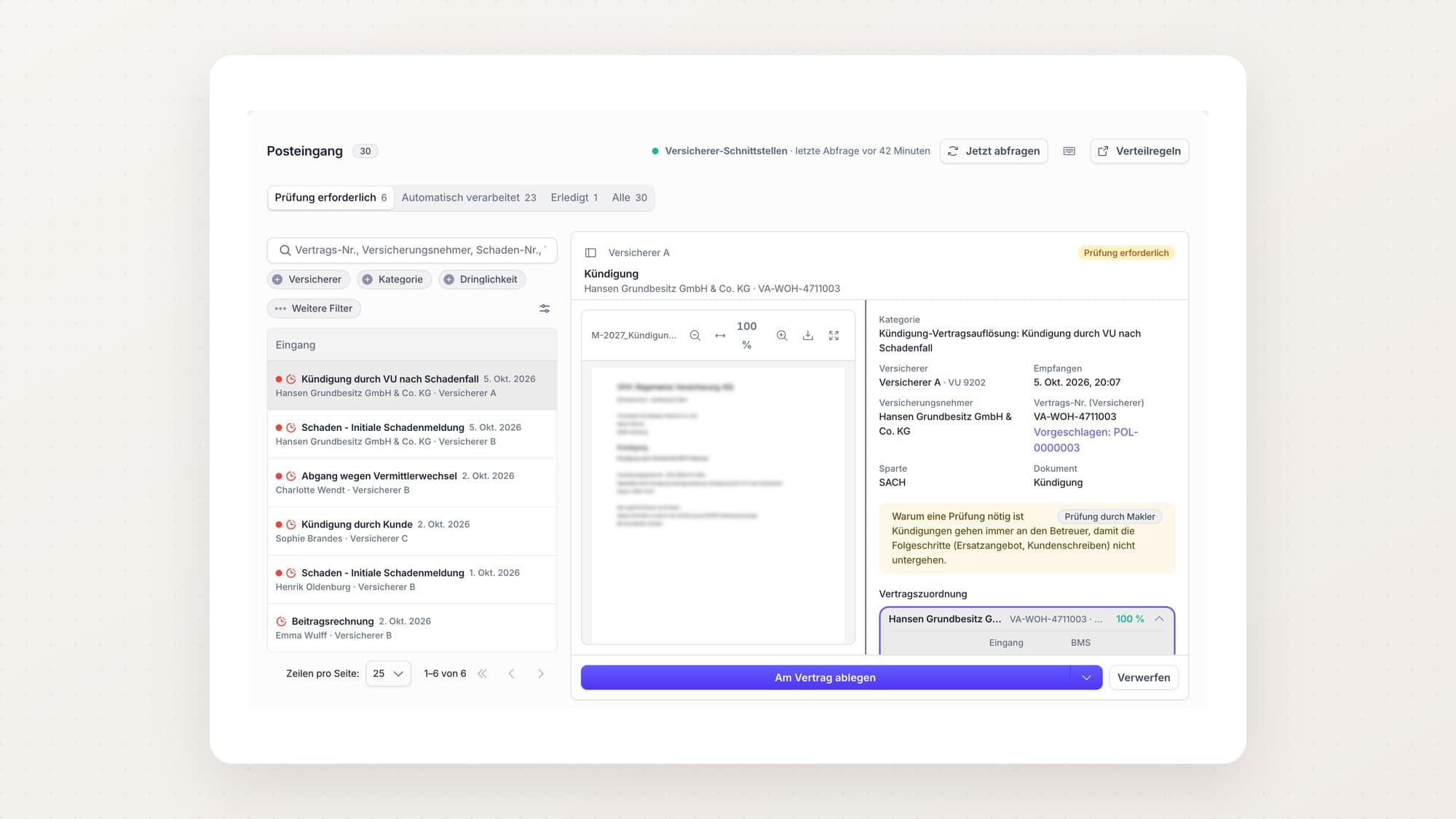
In many brokerages, incoming documents are still handled like this: the insurer provides a PDF, someone downloads it, renames it and uploads it again into the broker management system. Yet BiPRO and GDV data have long delivered everything needed to file documents automatically. The problem is rarely the standard. It's what happens to the data afterwards.
Everyday life in document intake
Policies, endorsements, premium invoices, claims correspondence: dozens of documents arrive from insurers every day. In many firms they end up in a mailbox or portal and are processed by hand. Download, open, find the client and contract, rename, upload, file.
Each step takes only seconds. Added up, it costs a lot. A simple example: at 200 documents a week and two minutes per document, that is more than six hours of work, week after week. Time that is missing from advising clients.
Then there are the errors. A document filed under the wrong contract often goes unnoticed until someone needs it.
What BiPRO actually delivers
BiPRO is the industry standard in Germany for digital exchange between insurers and intermediaries. Documents don't arrive as loose PDFs, but with metadata: policy number, document type, insurer, date. Many insurers also deliver GDV data records with portfolio and change data.
So in most cases, the information about where a document belongs is already included. Nobody needs to look it up again.
Why the data often goes unused
If the data is there, why do so many firms still work by hand? The reasons are usually the same.
Retrieval is only half automated. The mailbox collects the deliveries, but the processing in the broker system is missing or incomplete.
Data quality doesn't match. Policy numbers are stored in different formats in the book, with and without spaces or hyphens. Automatic matching fails on small details.
Trust is missing. Anyone who has once seen a document matched to the wrong contract prefers to check everything themselves afterwards. Understandable, but expensive.
File automatically or review
The answer is not either-or. A good system separates two paths.
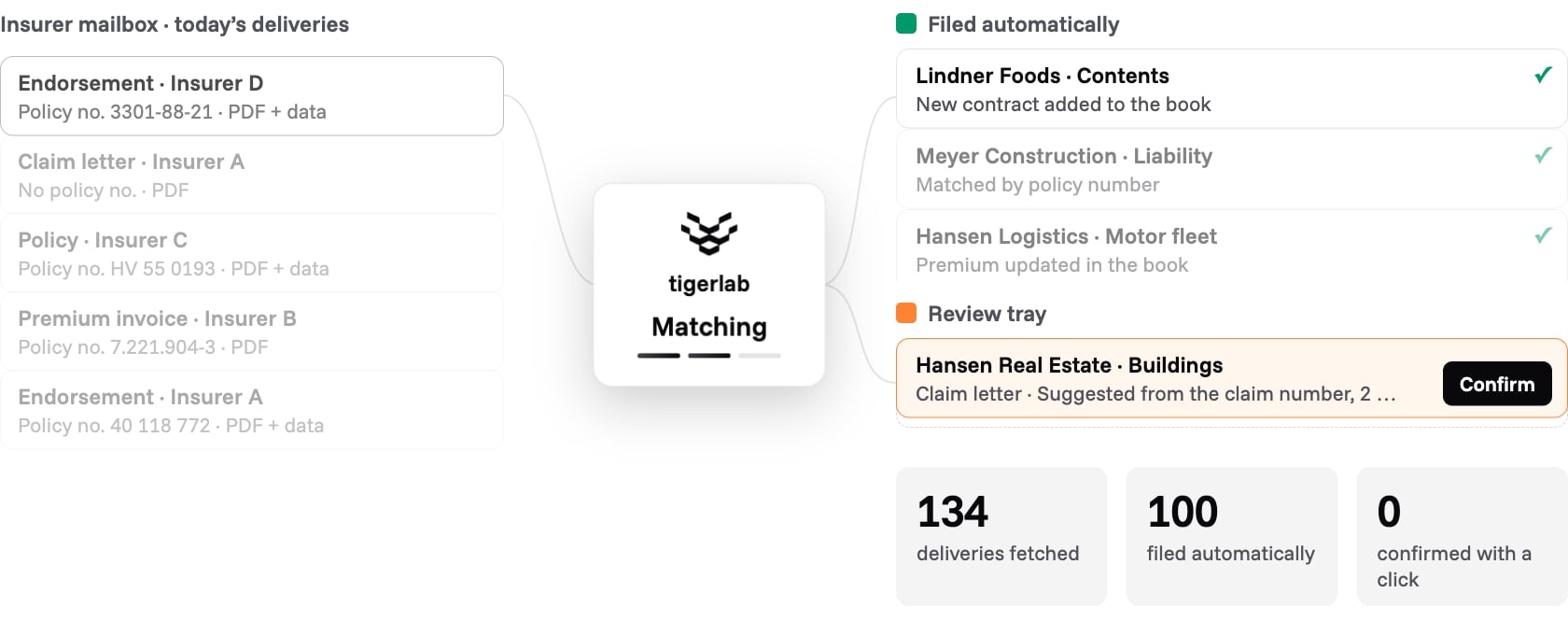
Clear cases are filed automatically. If the policy number matches exactly one contract in the book, the document goes to the right client and contract without anyone touching it. For most firms, that is the bulk of deliveries.
Uncertain cases go to a review queue. If there is no match or more than one, the system suggests a match, and a staff member confirms it with one click.
Portfolio data updates itself. Changes from GDV data, such as a new premium or a changed sum insured, are applied to the book directly. No one has to type them in.
The firm keeps control, and the software takes over the routine.
Why this is more than saving time
Current portfolio data is the basis for everything else. If you want to check whether a contract still meets your house standard, you need the correct sum insured in the system, not the one from three years ago. If you want to find coverage gaps, you need a complete book.
Automated document intake is therefore not a convenience feature. It is the precondition for a broker system to think ahead at all.
Five questions for your broker system
- Are BiPRO deliveries retrieved automatically, or does someone have to trigger them?
- Are documents matched to the right contract automatically, based on the metadata?
- Is there a review queue for uncertain cases, with a suggested match?
- Are changes from GDV data applied to the book directly?
- Can you see what percentage of deliveries are filed without manual work?
If you answer no to more than one question, there is a lot of unused time in your document intake.
Frequently asked questions
What is BiPRO? BiPRO is an industry standard for the digital exchange of data and documents between insurers and intermediaries in Germany. It means documents are delivered with structured additional information.
What is the difference between BiPRO and GDV data? BiPRO mainly governs how documents and data are transported. The GDV data record is a format for portfolio and change data on contracts. The two complement each other.
Can a document be matched to the wrong contract automatically? If the system only files exact matches automatically and sends all other cases for review, the risk is low. What matters is a clean data foundation in the book.
Do I need a new broker system for this? Not necessarily. Use the five questions above to check first what your current system can do and what goes unused.
About the author
Holm Schimanski is Partner and Chief AI Product Officer at tigerlab. He has worked in B2B enterprise software for more than 21 years and is responsible for tigerlab brokerage, a broker management system in use in more than 30 countries.