Write down your quality standard: why every brokerage needs a house standard
Almost every brokerage has a quality standard for its clients' insurance cover. Hardly any has written it down. A written house standard makes advice comparable, provable and transferable, and it is the basis for checking offers systematically.
What is a house standard?
A house standard sets out the minimum cover your firm recommends, per line of business and per client group. It describes sums insured, essential cover elements, exclusions you won't accept, and deductibles you consider reasonable.
It is not a product list and not a recommendation for a particular insurer. It is the yardstick you measure every offer against, no matter which provider it comes from.
In many firms this yardstick already exists, but only in the head of the owner or the most experienced staff. That is exactly the problem.
Why it should be written down
Consistent advice. As long as the standard only exists in someone's head, quality depends on who is advising. With a written standard, a client gets the same recommendation whether they speak to the owner or to a new colleague.
Documenting advice under the IDD. The IDD requires advice that matches the client's needs, and documentation of that advice. With a fixed yardstick, you can justify and record every deviation: the client knowingly chose a lower sum insured after the broker pointed out the house standard.
Lower liability risk. In a dispute, what counts is what was documented. A standard that applies to all clients, with deviations justified in writing, puts you in a far better position than advice that can only be reconstructed from memory.
Onboarding and succession. New staff learn faster when the quality standard can be read. And in a portfolio transfer, a documented standard has value of its own: the successor takes over not only the contracts, but also the logic behind them.
What goes into it
A good house standard is short and specific. Per line and client group, four items are enough: minimum cover, essential elements, unacceptable exclusions and the highest acceptable deductible. The table below shows what this can look like. The values are examples, not recommendations; your firm sets them based on its own experience.
Line and client group | Minimum cover | Essential elements | Not acceptable | Max. deductible |
|---|---|---|---|---|
Personal liability, families | €10m combined single limit | Default cover (uncollectable third-party claims), loss of keys | Exclusion of children below the age of legal responsibility | €150 |
Public liability, trades | €5m combined single limit | Damage to rented buildings, damage to items being worked on | Exclusion of gradual damage | €500 |
Contents insurance, commercial | New-for-old value | Waiver of underinsurance, gross negligence cover | Settlement at current (depreciated) value | €1,000 |
Cyber, small businesses | €250,000 | Business interruption, forensics and crisis response | Exclusion for missing updates without a causal link | €1,000 |
Clarity matters more than completeness. Better ten lines defined properly than forty defined halfway.
Three yardsticks for every offer
With a house standard, every offer can be measured against three yardsticks.
Your own house standard answers the question: does the offer meet what we promise our clients? This is the most important check, because it protects the quality of your own advice.
The market standard answers the question: where does the offer stand compared with what other insurers provide today? An offer can meet your house standard and still lag behind the market. Then it's time to raise the standard.
The specific offer shows where it sits above and where it sits below. Deviations upwards are arguments in the client conversation. Deviations downwards must be discussed and documented.
Keeping these three levels apart makes advice clearer. The client doesn't just see a price, but understands what they get for their money and what they don't.
How to go about it
A first house standard doesn't take weeks. Two or three working sessions with the team are usually enough.
- Start with the most important lines. Choose the five lines that make up most of your book. The rest can follow later.
- Collect the knowledge you already have. Ask your most experienced advisers: what do you always recommend? What would you never accept? Their answers are the raw material.
- Set the four items for each line. Minimum cover, essential elements, unacceptable exclusions, maximum deductible. Where client groups differ, add a row.
- Check against the market. Compare your draft with current policy wordings and comparison tools. If your standard is well below the market, raise it.
- Define how deviations are handled. Decide how a deliberate deviation is documented, for example with a short note and the client's confirmation.
- Review once a year. Markets and wordings change. A fixed date each year keeps the standard current.
From document to system
A house standard as a Word document is a good start. It only has its full effect when it is stored where the daily work happens: in the broker management system.
Then the software can check every new offer against the standard automatically and flag deviations before the offer reaches the client. It can show which contracts in the book no longer meet the standard, for example because sums insured haven't been adjusted in years. And it records when an adviser pointed out a deviation.
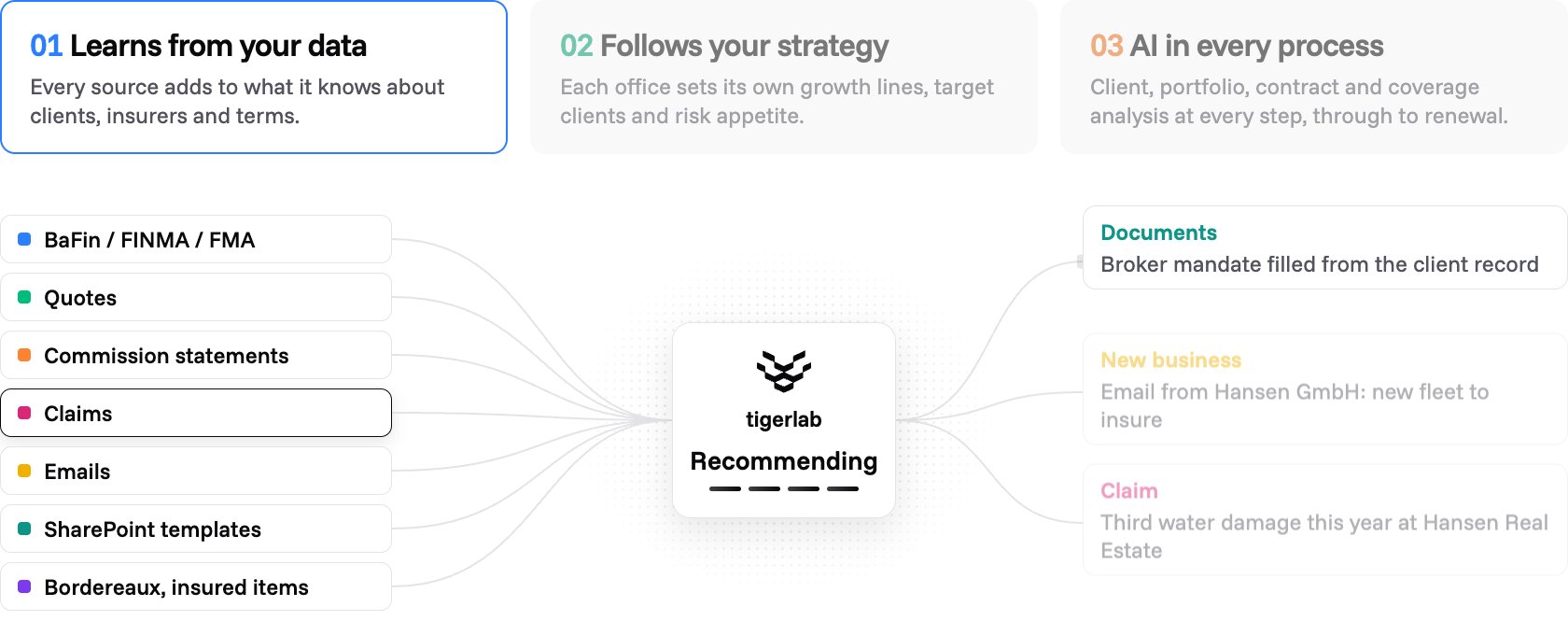
This is exactly the link we are building in tigerlab brokerage: the firm's house standard becomes part of the daily check, instead of gathering dust in a folder. But the most important step comes before any software: writing down your own standard properly, once.
Frequently asked questions
What is a house standard in a brokerage? A written minimum standard for the insurance cover the firm recommends per line and client group. It serves as the yardstick for every offer, regardless of the insurer.
Is a house standard legally required? No. But it supports advice that matches the client's needs and its documentation, as the IDD requires, and it makes it easier to prove careful advice in a dispute.
Can a client deviate from the house standard? Yes. The client decides. What matters is that the broker points out the deviation and documents it.
How often should the house standard be updated? At least once a year, and also whenever policy wordings in the market improve noticeably.
How many lines should it cover? To start, the five lines with the largest share of your book are enough. More can be added step by step.
About the author
Holm Schimanski is Partner and Chief AI Product Officer at tigerlab. He has worked in B2B enterprise software for more than 21 years and is responsible for tigerlab brokerage, a broker management system in use in more than 30 countries.